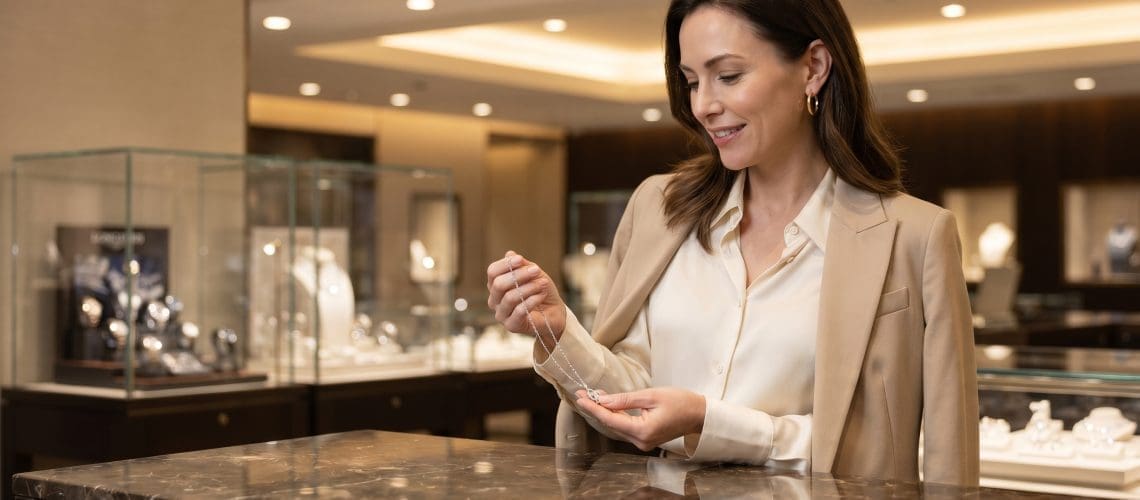
Have you spotted those tempting assignments for high-end brands — luxury car dealerships, exclusive boutiques, or upscale resorts — and wondered how to land one? These shops often come with a term that can confuse newcomers: luxury buyer pre-qualification.
This guide breaks down the concept and explains why it is key for these unique assignments. By the end, you will know exactly what the screening involves and how to position yourself to pass it.
What luxury buyer pre-qualification actually means
In mystery shopping, luxury buyer pre-qualification is a screening process designed to confirm you can pass as a genuine high-end customer [1]. It is not a check of your actual wealth or credit score. It is a test of your ability to blend in and honestly assess the experience at a luxury store.
This differs greatly from financial pre-qualifications for mortgages or car loans, which verify financial standing. Luxury pre-qualification checks if you fit the part of a luxury consumer.
Luxury brands require this extra screening because their customer experience is paramount. They invest heavily in creating an exclusive feel and need shoppers who can comfortably blend in without raising suspicion [2].
The mystery shopping company (MSC) acts as a gatekeeper, protecting the client’s reputation. Only shoppers who fit the required persona get assigned. This protects the integrity of the data and ensures the brand gets useful, realistic feedback.
Why mystery shopping companies use pre-qualification
Luxury brands have unique needs that call for a more strict selection process. The table below outlines the primary reasons MSCs use pre-qualification for high-end assignments.
| Reason | Description |
|---|---|
| Security and value | High-value goods require mature, responsible shoppers who can follow strict security protocols [3]. |
| Persona authenticity | Staff behavior may change if a shopper does not appear or act like a typical client, making the report inaccurate. |
| Reputation protection | A poorly executed shop can disrupt the store’s feel or damage the brand’s high-end image. |
| Complex scenarios | Luxury shops often involve complex sales processes requiring high levels of observation and recall. |
| Report quality | Pre-qualification filters for reliable shoppers who can deliver the detailed, high-quality reports these brands demand. |
Types of shops that require luxury pre-qualification
Luxury pre-qualification is common across several high-end sectors. You will typically encounter it when applying for these types of assignments:
- Luxury retail: Iconic fashion and jewelry brands such as Louis Vuitton, Gucci, Cartier, and Rolex [4].
- High-end automotive: Premium dealerships for brands like Mercedes-Benz, Porsche, BMW, and Lexus.
- Real estate: Tours of luxury apartments, penthouses, or exclusive gated communities.
- Premium services: High-end spas, private cosmetic clinics, and fine-dining spots.
- Ultra-luxury assignments: These may involve items costing over $10,000, multi-day visits, or a Non-Disclosure Agreement (NDA).
What pre-qualification is not
It is easy to mix up the scope of these screenings. Here is what luxury buyer pre-qualification does not involve:
Luxury buyer pre-qualification is about credibility, not wealth. Most shoppers can qualify with the right prep and mindset.
- It is not a credit check: MSCs do not access your credit report or financial history.
- It is not proof of wealth: You do not need a high net worth — you only need to portray the image of a luxury consumer.
- It is not a purchase requirement: You are never required to spend your own money on high-value items. The focus is on the interaction, not the transaction.
- It is not a background check: While some companies run general background checks, this specific screening is about your skills.
What mystery shopping companies look for
When reviewing your application for a luxury shop, MSCs focus on four main pillars: profile strength, scenario believability, light financial plausibility, and professionalism.
Shopper profile and writing quality
Your past performance is the best sign of future success. MSCs look for shoppers with a strong track record and, most importantly, strong writing skills [5]. Luxury reports are long and detail-heavy.
You need to describe subtle details in service and feel — without grammar errors. Every mystery shopping report you submit for a standard shop is a writing sample for future luxury chances.
Scenario believability
Can you act the part? This comes down to your demeanor, confidence, and comfort in upscale settings. You must appear at ease among high-end products and assertive sales associates.
If you seem nervous or out of place, you risk breaking cover and delivering an unusable report.
Light financial plausibility
MSCs do not check your bank account, but they do look for consistency. You may be asked to self-report an income range or work history that aligns with the brand’s target audience.
A “marketing executive” persona is often more believable for a Rolex shop than an “entry-level clerk” persona.
Common pre-qualification questions and strong answers
During the screening, you may be asked questions to gauge your fit. The table below shows examples of how to handle these effectively.
| Question | Strong answer (pass) | Weak answer (fail) |
|---|---|---|
| What is your occupation? | “I am a consultant in the tech industry.” | “I’m currently looking for any extra work.” |
| What is your household income? | “My household income is in the $150k+ range.” | “I live paycheck to paycheck.” |
| Have you bought luxury goods? | “Yes, I often buy premium accessories.” | “No, I’ve never been in a store like this.” |
| Comfortable with $50k budgets? | “Absolutely — I am comfortable discussing high-value investments.” | “That’s a lot of money; I’d be very nervous.” |
| Can you dress the part? | “Yes, I have a professional wardrobe suitable for high-end retail.” | “I usually just wear casual clothes like jeans.” |
How to pass: tips for new shoppers
If you are new to luxury shopping, follow these steps to improve your chances of approval:
- Strengthen your profile. Fully complete your MSC profile using formal language. Highlight any experience that requires attention to detail or high-level writing.
- Build credibility. Mention your knowledge of luxury brands. If you do not own luxury items, research the brand’s history and current collections so you can speak to them with confidence.
- Refine your writing. Treat every small shop as a rehearsal. Submit flawless, detailed mystery shopping reports for standard shops to prove you can handle the demands of luxury assignments.
- Practice your persona. Visit a high-end mall or dealership to observe the environment. Getting comfortable there first makes your confidence feel natural on a real assignment.
Common mistakes to avoid
These pitfalls often lead to rejection:
- Breaking character: Never say “I can’t afford this” or “This is so expensive.”
- Dressing inappropriately: Showing up in overly casual attire is an immediate red flag for staff.
- Sounding unprepared: If you do not fully understand the shop scenario, you will come across as hesitant or confused.
- Incomplete applications: MSCs view a half-finished application as a sign of a half-finished report.
What happens after you are pre-qualified
Once you have proven yourself, the rewards are real. Pre-qualified shoppers gain access to the highest-paying assignments in the industry. You will often receive priority scheduling, access to ultra-luxury shops, and chances for performance-based bonuses.
More importantly, you build a name with schedulers as a top-tier shopper. That leads to more steady and rewarding work over time.
Luxury buyer pre-qualification is a hurdle, but it is one that most focused mystery shoppers can clear with the right prep. Focus on your writing, your persona, and your track record — and the most high-end shops in the industry become open to you.
Frequently asked questions
What happens if I fail the pre-qualification screening?
Most MSCs do not share reasons for rejection. The best move is to wait 3–6 months, build more standard shop history, and reapply. Focus on improving your written report scores in the meantime — that is the signal MSCs rely on most when reassessing your profile.
Does my pre-qualified status carry over to other MSCs?
No — pre-qualification is company-specific. Qualifying with one MSC does not transfer to another. That said, a track record of completed luxury shops can strengthen future applications, since some companies ask for prior experience during their own screening process.
Will my pre-qualified status expire if I stop shopping for a while?
It depends on the MSC. Some maintain your status as long as your account stays active. Others may ask you to re-confirm your persona details after a long gap. Staying active with standard shops between luxury assignments is the simplest way to keep your profile current.
Which MSCs are most likely to offer luxury assignments?
Companies focused on hospitality and high-end retail tend to have the strongest luxury programs. Coyle Hospitality Group is well known for fine dining and hotel evaluations. Ipsos Mystery Shopping handles luxury brand clients across retail and automotive. The MSS company directory includes profiles that identify luxury work as a specialty area.
How much more do luxury mystery shops pay compared to standard assignments?
The difference is substantial. Base fees for luxury shops typically range from $50 to $150+, compared to $10–$25 for a standard retail shop. Ultra-luxury assignments can include full reimbursement on high-value purchases, multi-day hotel stays, or fine dining for two. The higher pay reflects both the complexity of the work and the value the brand places on the data.
Can male shoppers be pre-qualified for luxury assignments?
Absolutely. Male shoppers are actively sought for high-end men’s retail — tailoring, watches, leather goods — as well as luxury automotive and fine dining. The pre-qualification process and criteria are the same regardless of gender. MSCs are looking for persona fit, not a specific demographic.
Do I need a designer wardrobe to complete luxury mystery shops?
No. You need to look the part on assignment day, not own a luxury wardrobe. Well-fitted business professional attire — a blazer, quality blouse or dress shirt, and polished shoes — reads as credible in most luxury settings. Some shoppers invest in one or two versatile pieces specifically for these assignments, which makes sense given the higher pay. Thrift and consignment stores are a practical, low-cost source for professional attire.