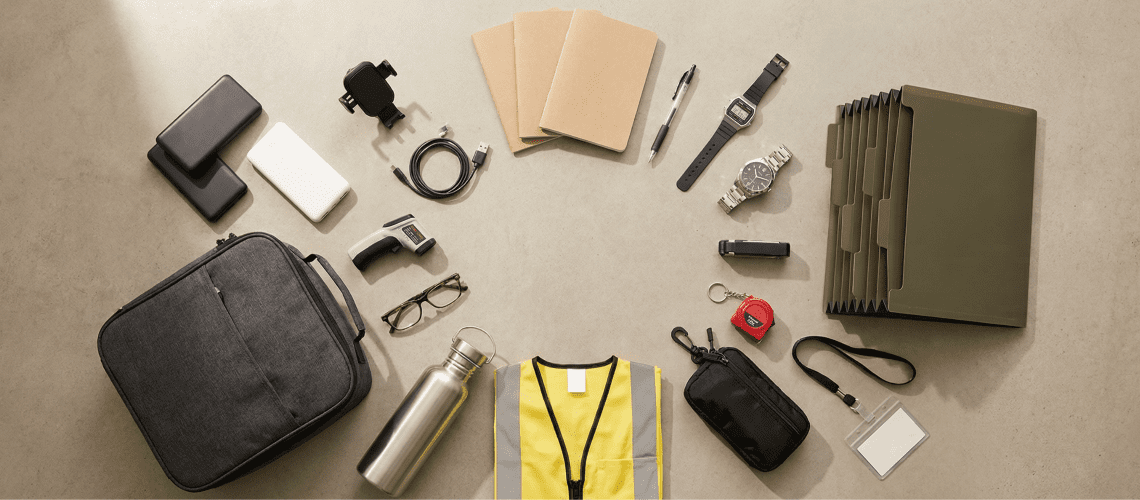
A dead phone battery, a lost receipt, or a forgotten pen can derail an otherwise perfect mystery shop. The difference between a smooth shop day and a frustrating one almost always comes down to preparation — specifically, having a small kit of affordable, practical items ready to grab and go.
The good news is you don’t need expensive gear. Experienced mystery shoppers consistently agree that the best carry kit is a simple one. Every item in this guide costs between $2 and $30, and none involve cameras, recording devices, or anything remotely spy-like. These are everyday carry items that happen to make mystery shopping dramatically easier.
This guide draws on recommendations from experienced shoppers on MysteryShopForum.com, mystery shopping company blogs from Ipsos, BestMark, and Secret Shopper, and hands-on testing in the field. Whether you’re heading out for your first shop or looking to tighten up your routine, this is the kit that gets the job done.
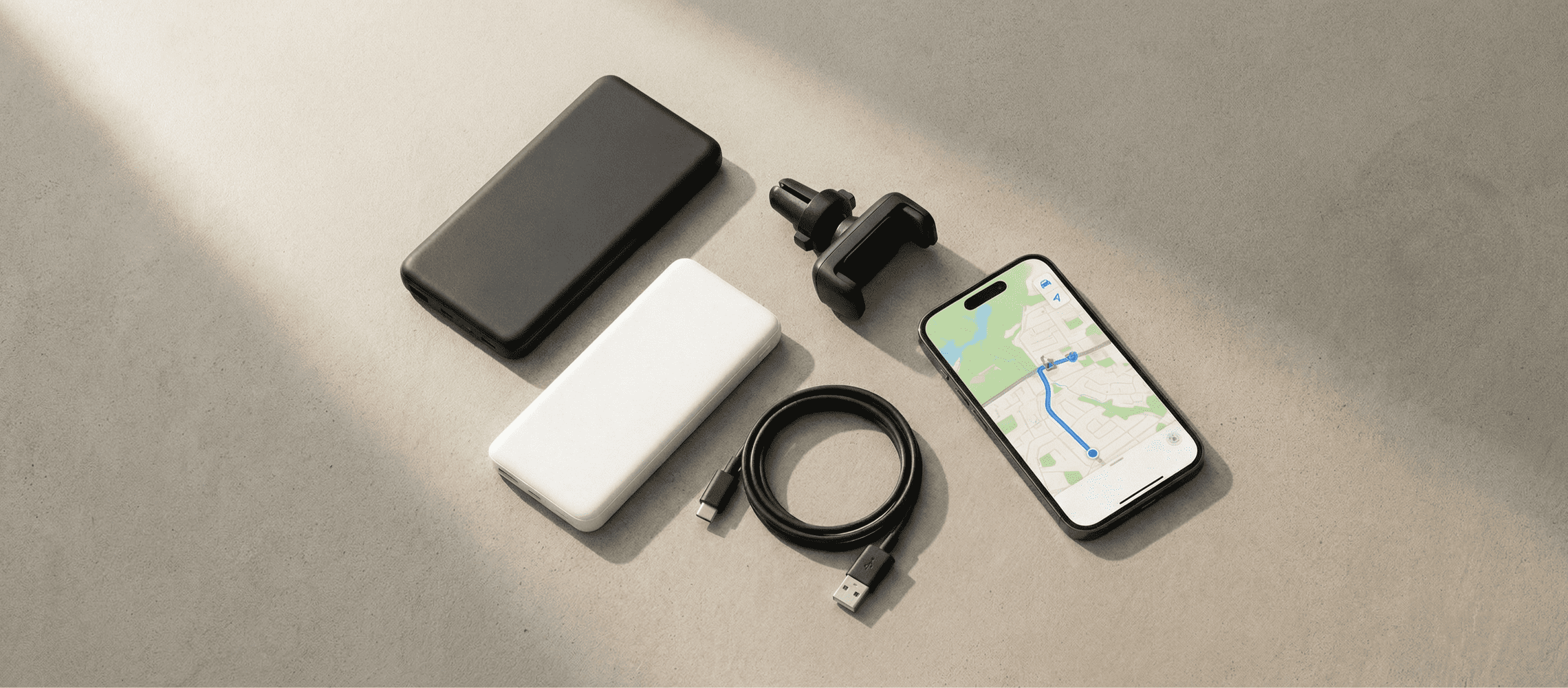 A portable charger and car mount are the two items experienced mystery shoppers say they can’t work without.
Your Phone Is Your Lifeline — Protect Its Battery
If you buy only one item from this list, experienced shoppers are nearly unanimous: make it a portable charger. Your smartphone handles GPS navigation between stops, timer apps for tracking service wait times, note-taking, receipt photos, and assignment details. A dead battery doesn’t just inconvenience you — it can mean failing to complete a shop you’ve already started, losing your reimbursement, and damaging your shopper rating.
Ipsos puts it plainly on their shopper resource page: taking photos, submitting reports, and navigating to multiple locations can drain your phone fast. A dead battery can bring a full day of mystery shopping to a stop. Forum user ShopperGirly echoes this from experience: “Chargers, adapters, and battery backups. So important in these days and times.”
For power banks, the INIU 10,000mAh portable charger (~$16) hits the sweet spot of fast charging, slim design, and value. It will fully charge most phones twice. The Anker PowerCore 10K (~$20) is the go-to name-brand pick. If you use an iPhone, forum regular Maverick1 specifically recommends the Anker Wireless Magnetic Battery Pack (~$26–$30): “Forget cables! I’m not bound by a vehicle or a home and can easily carry the model I suggested with me.” On a tight budget, the Miady 5,000mAh 2-Pack (~$13) lets you stash one in your bag and one in your car.
A car phone mount ($8–$15) is the other non-negotiable phone accessory. Mystery shoppers often visit three to eight locations in a day. Hands-free navigation is both a safety issue and an efficiency booster. Forum user mystery2me calls it “my main thing — my car phone holder, which attaches to a vent and makes navigation easy.” The Qifutan dashboard/vent mount (~$10) and the iOttie Easy One Touch 6 (~$18) are both reliable. Pair either one with a short 1-foot charging cable (~$5–$8) so you can top off your phone from a power bank without a tangle of cord across your lap.
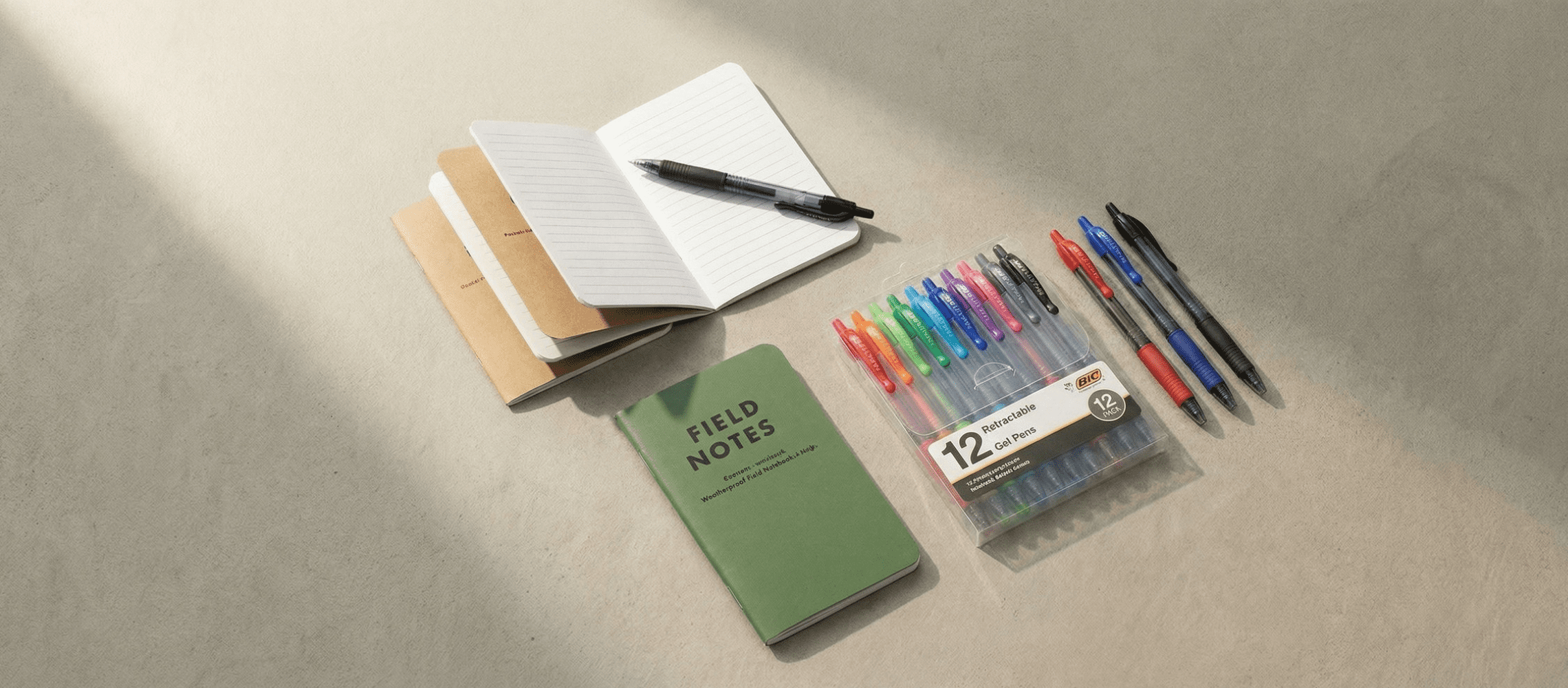 A pocket notebook and a reliable gel pen are still the fastest way to capture observations on the floor of a busy shop.
The Humble Pen and Notebook Still Reign Supreme
Digital tools are powerful, but every mystery shopping resource — from BestMark’s official guidelines to decade-long forum veterans — lists a pocket notebook and pen as core equipment. BestMark advises shoppers to always have working pens and note-taking paper available, warning that forgetting shop notes because you had no supplies is an avoidable mistake that hurts your reports.
The reason is practical. A small notebook looks natural. You can jot down an employee’s name, a wait time, or a price while appearing to write a grocery list. The trick, as Ellis Mystery Shopper Jobs notes, is to do this out of sight — a quick trip to the restroom works well without drawing attention from staff.
For notebooks, Field Notes Kraft Original 3-pack (~$10) gives you three pocket-sized, 48-page notebooks that slip into any pocket. Rite in the Rain weatherproof notebooks (~$8–$12) are ideal for outdoor or drive-through shops where spills happen. For pens, the community favorite is the Pilot G2 retractable gel pen — smooth, fast-drying, click-to-deploy, no cap to fumble with — about $8–$10 for a 12-pack. Forum user ServiceAward offers a truth every shopper learns the hard way: “Extra pens. I’m always dropping and/or leaving them behind.” Buy the 12-pack and scatter them across your car, bag, and home.
Many experienced shoppers now use their phones for notes instead of — or alongside — paper. A pre-built notes template with fields like “Time in / Hostess name / Time to greet / Server name / Drinks / Entree” works well for restaurant shops. Others use Google Calendar’s notes field for timestamps, with forum user Amarsir praising it: “It’s the best place to put times and observations for the report later.” Free apps like Microsoft OneNote, Google Keep, and your phone’s default notes app all work well.
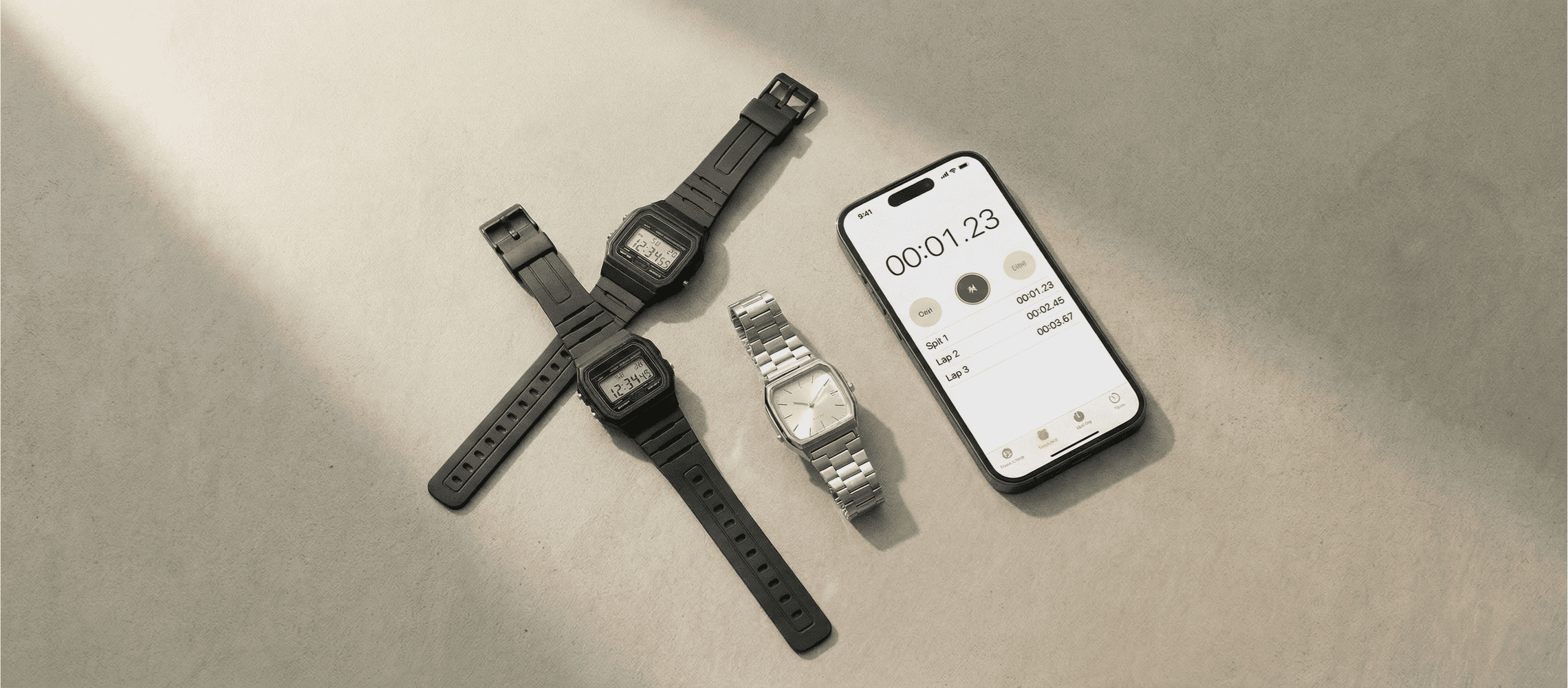 Knowing exactly how long a service interaction took is one of the most common mystery shop reporting requirements.
Timing Service Interactions Without Looking Suspicious
Almost every mystery shop involves timing something — how long before you were greeted, how many minutes until your food arrived, how long the checkout line took. A reliable, discreet timing method is essential, and the community is split between two approaches: phone stopwatch apps and wristwatches.
Most shoppers use their phone’s built-in stopwatch with the lap function. Forum user R.Robot keeps it simple: “I just use Laps on the stopwatch that came with my Pixel.” The key technique is to start the timer when you enter, then tap the lap button at each required timing point — greeted, seated, food delivered, check presented. As one veteran explains, “I pretend to be reading emails or texting and touch the lap button for every required point. So many other customers are using their phones, I don’t look suspicious.”
However, in situations where phone use might draw attention — upscale restaurants, car dealerships, bank evaluations — a digital wristwatch with a stopwatch function is more discreet. The Casio F-91W (~$18) is arguably the best value in the entire mystery shopping toolkit. It weighs 21 grams, features 1/100-second stopwatch precision with a split-time function, runs on a single battery for seven years, and costs less than lunch. The slightly dressier Casio A158WA (~$22) has a stainless steel band that blends better at upscale venues while using the same reliable stopwatch module.
A useful backup technique: if you need exact timestamps but can’t visibly use a timer, take a screenshot of your phone’s clock at key moments. The screenshot preserves the exact time, and you can reference it when writing your report later that evening.
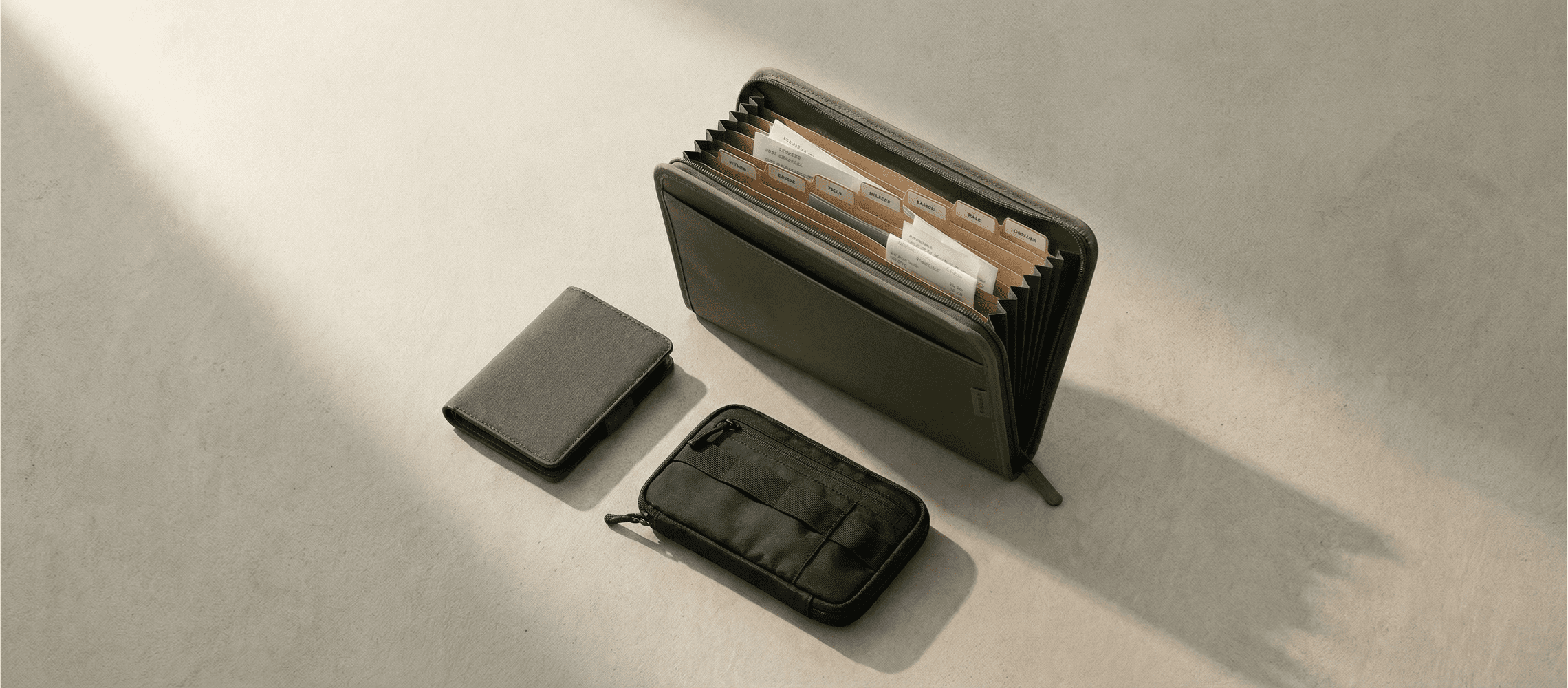 A zipped file folder for documents and a small EDC pouch for daily carry items cover nearly all of your organization needs.
Organization Is What Separates Veterans from Beginners
Experienced mystery shoppers treat their car as a mobile office. The single most-endorsed organizational item on MysteryShopForum is a zipped file folder ($5–$12) for storing printed Letters of Authorization (LOAs), leave-behind forms, and shop guidelines. Forum user ArkLaMissshopping advises keeping at least ten copies of LOAs for your most-shopped brands pre-printed and on hand: “If you are out of town and see you can do one of these jobs, take the job because you already have the authorizations with you.” Forum member Morledzep keeps “LOAs and Leave Behind forms for all of the gas stations that I regularly shop, 10 of each, in 4 or 5 plastic folders in the seat pocket.”
For receipts, a small accordion file folder with 13 pockets (~$5–$8) is the community workhorse. Label the tabs by date or client, and file each receipt immediately after the shop. The most-repeated hard rule across every source: photograph every receipt, business card, and brochure before you leave the location. Forum veteran Luna126 puts it directly: “Always take a photo of the business card, receipt, brochure etc before leaving for home or the next shop.” Thermal receipt paper fades fast — sometimes within days — so a digital backup is non-negotiable. Use Adobe Scan (free), your iPhone’s built-in document scanner in Apple Notes, or Google Drive’s scan feature on Android.
An EDC (everyday carry) pouch ($8–$15) ties everything together. The Condor Sidekick Pouch (~$12) or ProCase Small EDC Pouch (~$10) keeps your pen, notebook, charger, cable, and small timer organized in one grab-and-go package. One clever organization trick from forum user jpgilham: separate photos from different shops by taking a quick photo of your dashboard between each location. It makes sorting report photos dramatically faster at the end of a multi-shop day.
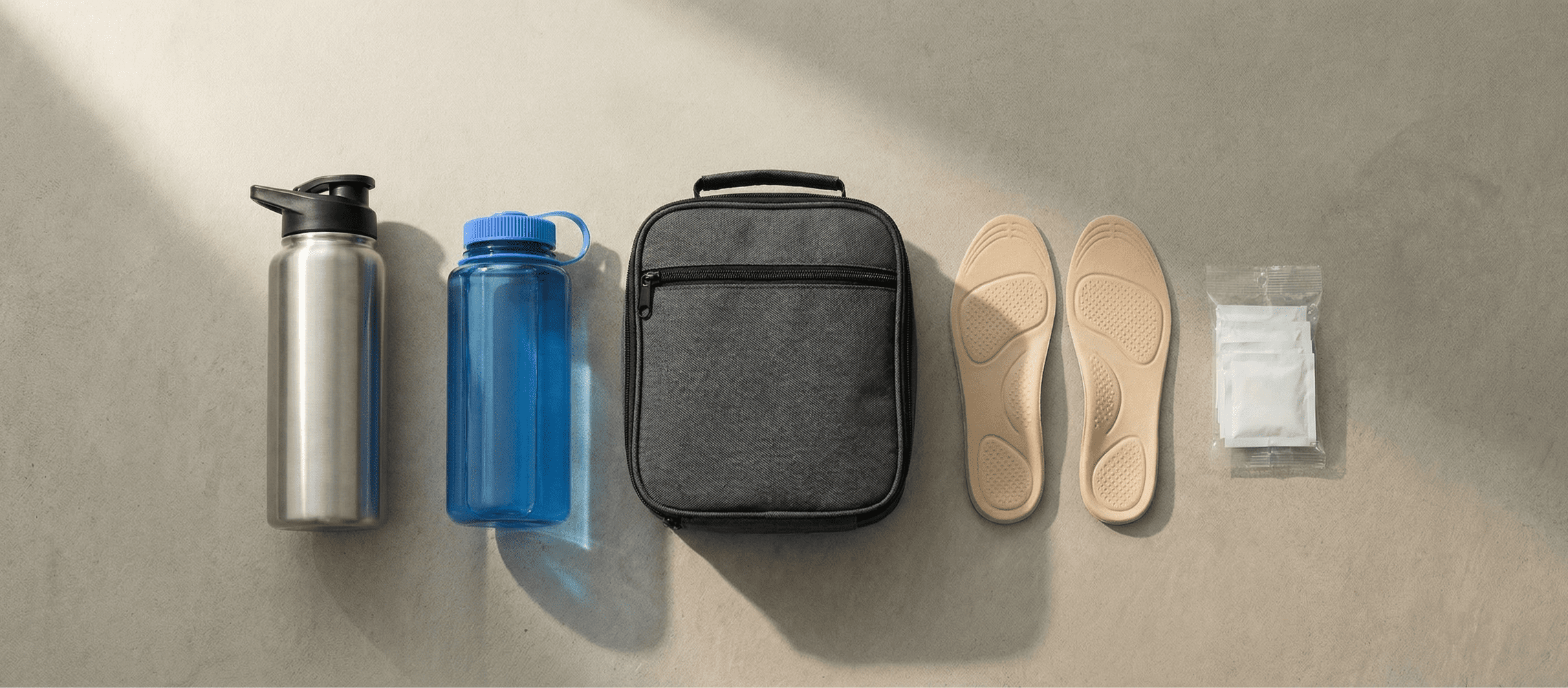 Staying hydrated and fed on a long shop route isn’t optional — it directly affects the quality of your observations and reports.
Surviving Long Shop Days with Comfort Essentials
When you’re running a route of five or more shops, physical comfort directly affects your performance. Tired, dehydrated, or hungry shoppers miss details — and details are literally what you’re being paid to notice.
A reusable water bottle ($12–$15) is baseline. Forum user Morledzep carries two — one for hot drinks, one for cold. The CamelBak Eddy+ (~$15) is ideal for car use since its bite valve is spill-proof and works one-handed while driving. The Nalgene 32oz (~$12) is nearly indestructible and holds enough for a full route day.
Dr. Scholl’s Walk Longer Insoles (~$12) matter more than most beginners expect. Hours of walking through retail stores, restaurants, and gas stations add up fast. They’re designed specifically for extended walking and are available at any drugstore. An insulated lunch bag (~$10) keeps snacks from wilting in a hot car and helps you avoid spending your reimbursement on food between stops.
Forum veterans keep a well-stocked comfort kit in their cars. User mystery2me carries cold medicine, ibuprofen, a knit cap for sudden cold weather, and a water-resistant jacket. WendyG10 keeps peanut butter crackers, protein bars, and dried fruit in a trunk supply box. And ShopperGirly adds a practical reminder: “Sometimes the simplest things come in handy, like a rubber band. You can use it to tidy up a charger cord or to put your hair up.”
For fast food shops specifically, forum user sestrahelena gives a specific warning: “A towel. Or many. For fast food shops, to protect clothes, seats and whatever from all the grease. If you do Sonics, you know what I mean.” Paper towels and hand wipes are cheap insurance for your car interior.
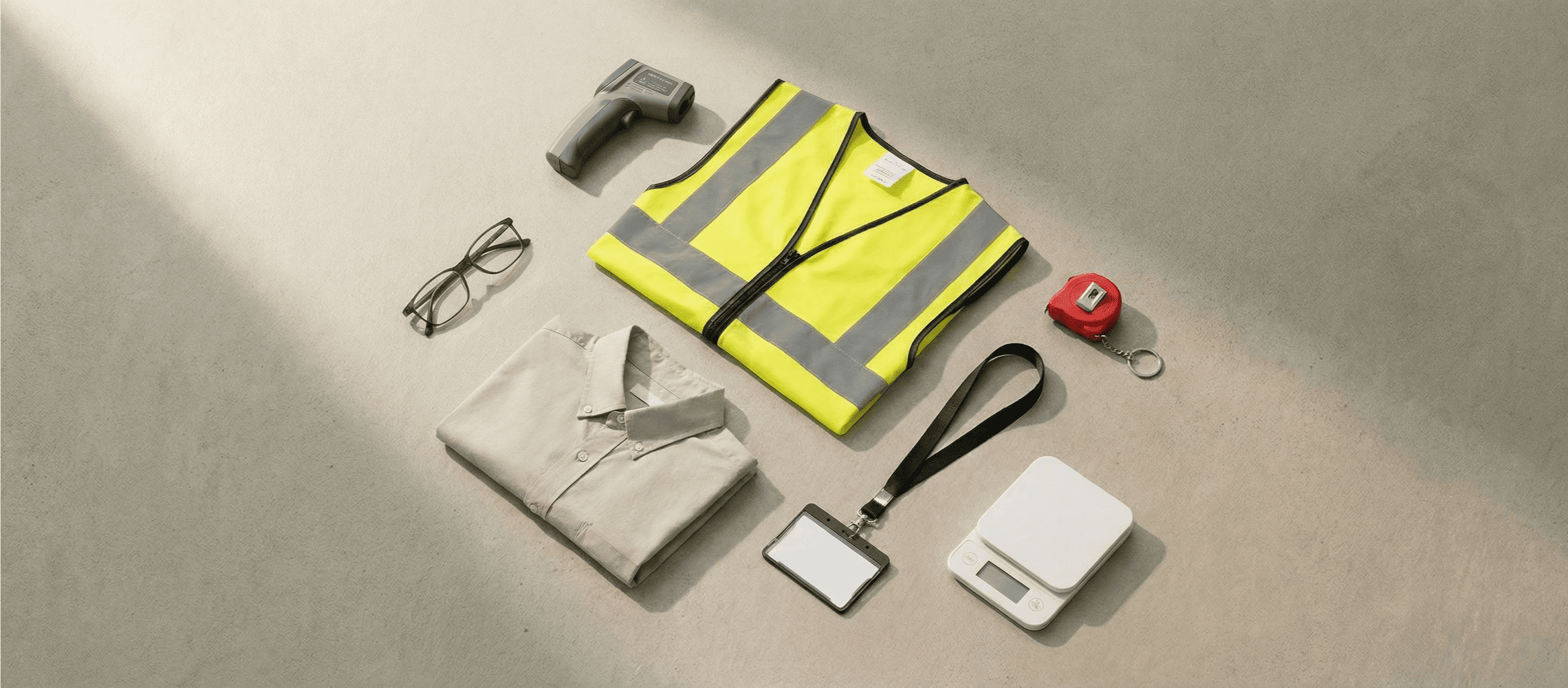 Specialty items like a safety vest and infrared thermometer are only needed for specific shop types — check your guidelines before buying.
Specialty Items for Specific Shop Types
Some items aren’t everyday carries but become essential once you take on certain shop categories. A high-visibility safety vest ($5–$12) is required for revealed gas station audits where you walk the exterior and introduce yourself as the evaluator. Ipsos identifies this as the most common equipment requirement across their gas station shops. Forum user Morledzep keeps a traffic vest, a traffic sweatshirt, and a rain poncho permanently in the car.
A few other specialty items worth knowing about: a small tape measure ($3–$7) for compliance checks on signage or display measurements, a lanyard with ID badge holder ($3–$6) for revealed audits where visible identification is required, and inexpensive reading glasses (~$12 for a multi-pack) for reading fine print on price tags, expiration dates, and ingredient labels in dim store lighting.
For food temperature or weight audits, some companies require an infrared thermometer (~$15) or a small digital kitchen scale (~$12). Only buy these when you’ve accepted a shop that specifically requires them — don’t spend money on specialty gear before you need it.
One final community tip that costs nothing: keep a change of clothes in your car. Forum user WendyG10 keeps business, business casual, and everyday options available. You’ll dress differently for a luxury car dealership evaluation than for a fast food drive-through, and being caught under-dressed can blow your cover.
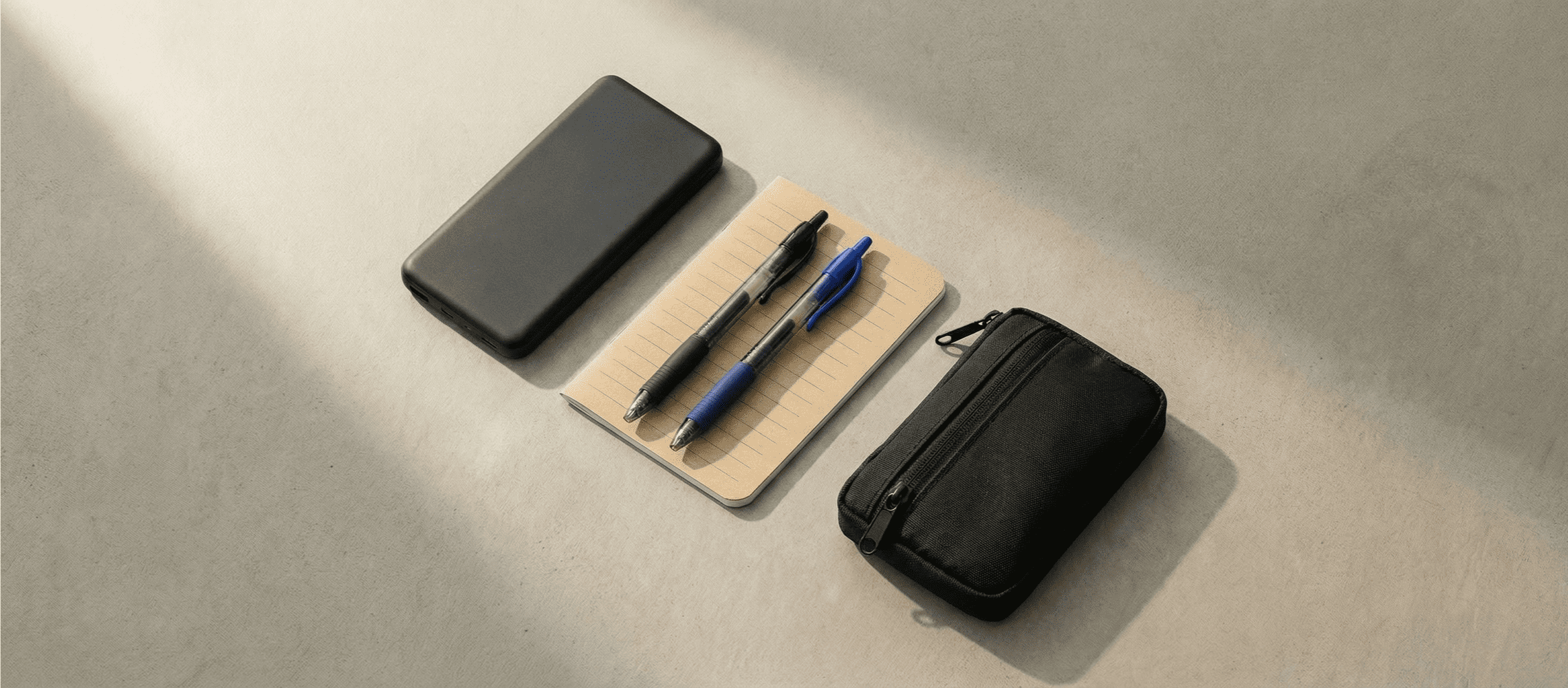 Start with the four core items, then add to your kit as specific shop assignments call for it.
Building Your Kit the Smart Way
The temptation for new mystery shoppers is to buy everything at once. Resist it. The community consensus is to start with what you already own and add items as specific needs arise. Ellis Mystery Shopper Jobs reassures beginners: there are just a few tools you need to get started, and most people already have them.
Recommended starter kit — under $85 total:
- Portable charger and car mount (~$26 combined) — prevents the most common shop-day disaster
- Pens and a pocket notebook (~$12 combined) — your primary observation tools
- Casio F-91W or similar digital watch (~$18) — discreet, reliable timing
- Zipped file folder and accordion receipt organizer (~$11 combined) — keeps paperwork sorted
- Basic comfort kit: water bottle, ibuprofen, snacks (~$15) — sustains you through multi-stop days
Add specialty items like a safety vest or thermometer only when a specific assignment requires them. As forum user WendyG10 notes, her extensive trunk supply box was gathered over time — yours will be too. Start lean, stay organized, and let your actual shop requirements drive future purchases.
Quick-Reference Product List
Every item mentioned in this article, organized by category. Prices are approximate and may vary.
| Item | Category | Est. Price | Buy on Amazon |
|---|---|---|---|
| INIU 10,000mAh Portable Charger | Phone Power | ~$16 | View on Amazon |
| Anker PowerCore 10K | Phone Power | ~$20 | View on Amazon |
| Anker Wireless Magnetic Battery Pack | Phone Power | ~$26–$30 | View on Amazon |
| Miady 5,000mAh 2-Pack Power Bank | Phone Power | ~$13 | View on Amazon |
| Qifutan Dashboard/Vent Car Mount | Phone Accessories | ~$10 | View on Amazon |
| iOttie Easy One Touch 6 Car Mount | Phone Accessories | ~$18 | View on Amazon |
| Short 1-Foot Charging Cable | Phone Accessories | ~$5–$8 | View on Amazon |
| Field Notes Kraft Original 3-Pack | Note-Taking | ~$10 | View on Amazon |
| Rite in the Rain Weatherproof Notebook | Note-Taking | ~$8–$12 | View on Amazon |
| Pilot G2 Retractable Gel Pens (12-pack) | Note-Taking | ~$8–$10 | View on Amazon |
| Casio F-91W Digital Watch | Timing | ~$18 | View on Amazon |
| Casio A158WA Stainless Steel Watch | Timing | ~$22 | View on Amazon |
| Sooez Zipped Accordion File Folder | Organization | ~$5–$12 | View on Amazon |
| H4D 13-Pocket Receipt Organizer | Organization | ~$5–$8 | View on Amazon |
| Condor Sidekick EDC Pouch | Organization | ~$12 | View on Amazon |
| ProCase Small EDC Organizer Pouch | Organization | ~$10 | View on Amazon |
| CamelBak Eddy+ Reusable Water Bottle | Comfort & Endurance | ~$15 | View on Amazon |
| Nalgene 32oz Wide Mouth Bottle | Comfort & Endurance | ~$12 | View on Amazon |
| Dr. Scholl’s Walk Longer Insoles | Comfort & Endurance | ~$12 | View on Amazon |
| Lifewit Insulated Lunch Bag | Comfort & Endurance | ~$10 | View on Amazon |
| TICONN High-Visibility Safety Vest | Specialty | ~$5–$12 | View on Amazon |
| CRAFTSMAN 6ft Keychain Tape Measure | Specialty | ~$3–$7 | View on Amazon |
| Lanyard with ID Badge Holder (3-Pack) | Specialty | ~$3–$6 | View on Amazon |
| Gaoye Reading Glasses (5-Pack) | Specialty | ~$12 | View on Amazon |
| Etekcity Infrared Thermometer 1080 | Specialty | ~$15 | View on Amazon |
| Etekcity Digital Kitchen Scale | Specialty | ~$12 | View on Amazon |
* Prices are estimates based on current Amazon listings and may change. Specialty items (thermometer, scale, safety vest) are only needed for specific shop types — don’t buy them until an assignment requires them.
Frequently Asked Questions
Do I need to buy all of these items before my first mystery shop?
No. Most first-time shoppers already own the essentials — a smartphone, a pen, and something to write on. Start with what you have. The only item worth buying before your first shop, if you don’t already own one, is a portable phone charger. Everything else can wait until a specific need comes up.
Can I use my phone’s stopwatch instead of buying a watch?
Yes, and most shoppers do. Your phone’s built-in stopwatch with the lap function handles the vast majority of timing requirements. A dedicated watch like the Casio F-91W only becomes worth buying if you regularly do upscale shops — fine dining, car dealerships, luxury retail — where pulling out your phone to check a timer could look obvious or break your cover.
Are there any items mystery shopping companies require me to bring?
It depends on the shop type. Most standard retail and restaurant shops have no equipment requirements beyond your phone for report submission. Revealed gas station audits almost always require a high-visibility safety vest. Some food service shops require an infrared thermometer or kitchen scale. Always read the shop guidelines carefully before accepting an assignment — required items will be listed there.
Can I deduct mystery shopping supplies on my taxes?
Potentially, yes. Since mystery shoppers are typically classified as independent contractors, ordinary and necessary business expenses may be deductible on Schedule C. A portable charger, notebooks, pens, and a watch used primarily for shops are reasonable business expense candidates. That said, tax rules vary by situation — consult a tax professional for advice specific to your circumstances. Keep your receipts either way.
How do I keep track of receipts when I’m doing multiple shops in one day?
Two habits cover this completely. First, photograph every receipt before you leave the parking lot — thermal paper fades fast and photos are your backup. Second, use a small accordion file folder with labeled pockets to physically sort receipts by client or date as you go. A photo of your car dashboard between shop locations also works well as a divider when you’re reviewing photos later for your reports.
What should I wear to a mystery shop?
The goal is to blend in as a typical customer for that location. Casual clothes work for most retail, fast food, and gas station shops. Business casual is better for bank, car dealership, and upscale service shops. Some shop guidelines will specify a dress code — always check before you go. Keeping a change of clothes in your car is a practical habit if you’re doing multiple shop types in one day.
Is there a bag or organizer that holds everything in the kit?
An EDC pouch handles the small daily carry items — pen, notebook, charging cable, power bank, and watch. For paperwork like LOAs and printed guidelines, a zipped accordion file folder kept in your car is the community standard. You don’t need a dedicated mystery shopping bag. Most experienced shoppers use a combination of a small personal bag or purse for carry items and a file folder in the car for documents.
The Bottom Line
The mystery shopping toolkit isn’t about gadgets or specialized gear. It’s about solving a handful of recurring, practical problems: keeping your phone alive, capturing observations discreetly, timing interactions accurately, organizing paperwork, and staying comfortable through long days on the road.
The most-recommended item across every source — forums, blogs, and company guides alike — is a portable phone charger. The second most universal pick is extra pens. The most impactful habit isn’t an item at all — it’s photographing every receipt before you leave the parking lot. Start there, build your kit gradually, and let your actual shop requirements drive what you buy next.